
FOR PARTS MANUFACTURERS
You know your parts better than anyone. Parts Commander is being built so manufacturers can create, maintain and publish their own catalogues, and stay in control of their product information.
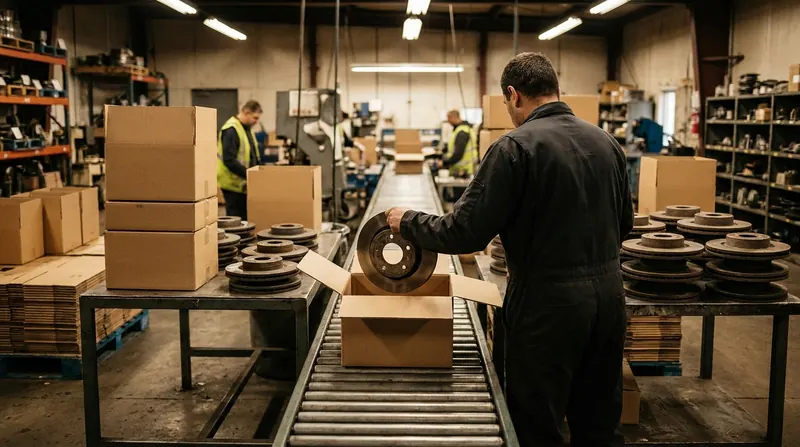
What you would be able to do
- Create and maintain your catalogue. Part numbers, descriptions, categories, attributes, dimensions, photographs and technical documents in one place. See catalogue management.
- Manage vehicle applications. Which vehicles each part fits, with the engine, drivetrain and other qualifiers that make the difference.
- Manage interchange. The OEM numbers each part replaces, and how your line cross-references to others.
- Publish accurate specifications. One set of product information, the same everywhere it is seen.
- Distribute to stores and repair shops. Your catalogue available to the parts stores, distributors and shops using the platform, on the terms you choose.
- Correct and update quickly. A fix to an application or a superseded number is published when you make it.
Why it matters to a manufacturer
A part that cannot be found cannot be sold. When your application information is missing or out of date at the counter, the sale goes to the brand whose information is there. Better product information is the most direct way to increase discoverability.
Wrong information costs you returns. A part listed for a vehicle it does not fit comes back, usually with a warranty claim attached. Qualifiers that reach the counter prevent that.
Catalogue software can be expensive. Dedicated catalogue management tools are a significant cost, and many smaller manufacturers make do with spreadsheets. The core of Parts Commander is intended to be free, which reduces your dependence on either.
It stays your information. You decide what is published and to whom. Your own data can be exported whenever you want it.
Working with what you have
Nothing here requires replacing your ERP, your product information system or your existing catalogue processes. The plan is to meet your data where it is:
- Bulk import from CSV and Excel files, and industry-standard catalogue imports.
- Validation that reports problems in a form your catalogue team can act on.
- Export of your own catalogue for use elsewhere.
- Integration with existing systems where that is practical.
If you are starting from a price sheet and a folder of photographs, our guide on how to create a parts catalogue sets out the work in order.
Talk to us early
Catalogue tools are being designed now, and the people who maintain catalogue data for a living are the ones whose opinion matters most. Request early access and choose "parts manufacturer", or join the founding partner program to be involved while it is built.
Common questions
Do we have to replace our ERP system?
No. Catalogue management is planned to work alongside the business systems you already run, exchanging data by file import and export, and by integration where that is practical.
Who controls our product information once it is published?
You do. You decide what is published and who receives it, and your corrections replace earlier versions wherever your catalogue is used.
Is this only for large manufacturers?
No. A smaller manufacturer or a specialty brand with a few hundred part numbers has the same need for an accurate, published catalogue, and usually fewer people to maintain one.
Will it cost us anything?
The core software is intended to be free. See pricing.