
MULTI-LOCATION INVENTORY
A second location changes inventory from a counting problem into a placement problem. The question stops being how many you have and becomes where they should be.
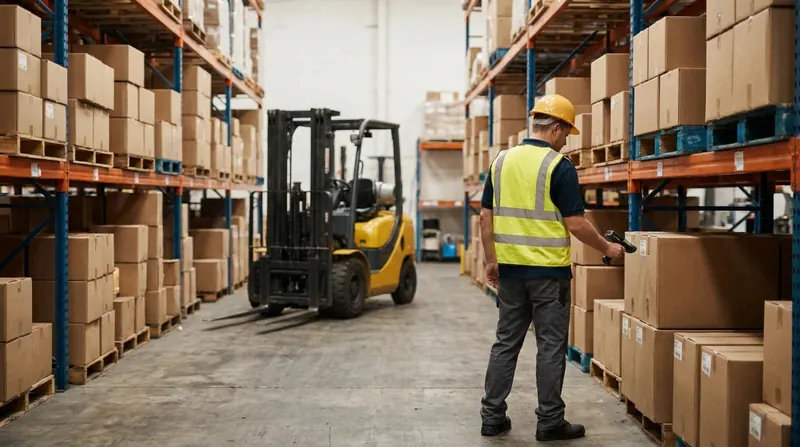
What to stock where
Not every location should carry everything.
- Fast movers everywhere. Filters, brake pads for common vehicles, belts, bulbs, fluids. Each store holds its own.
- Medium movers by local demand. A store near a fleet yard stocks differently from one beside a subdivision. Use each store's own sales history.
- Slow movers in one place. One unit at the hub serves every store, instead of one unit at each that sells once a year.
- Local specialties. Agricultural, marine or heavy-duty lines at the stores where those customers are.
The common mistake is opening a second store with a copy of the first store's inventory. Half of it will not suit the new location's customers.
Seeing all the stock
The single biggest gain from multiple locations is being able to say "we have it at the other store, it will be here at two". That needs:
- Every location's on-hand quantity visible at every counter, up to the minute.
- Reserved and in-transit stock shown separately from what is free to sell.
- A way to request the part from the counter, without a telephone call to the other store.
Transfers
A transfer is a movement with three states: requested, in transit, received. Skipping the middle one is what makes stock vanish.
- Ship against a transfer document, never informally. "I threw two in the truck for you" is how counts drift.
- In transit is a location. The part has left one store and is not yet stock at the other.
- Receive at the destination. Quantities confirmed, discrepancies recorded the same day.
- Transfers for a customer stay linked to that customer's order, so the part is not sold to someone else on arrival.
- Regular runs. A fixed schedule between locations lets the counter make promises.
Purchasing
- Combine demand. Order for the group, to reach supplier minimums and freight thresholds once.
- Ship to where it is needed. Either direct to each store or to the hub for redistribution, whichever costs less to handle.
- Reorder points by location. Each store's minimum and maximum reflect its own sales.
- Rebalance before you buy. If one store has six and another has none, move three before ordering more.
Pricing and accounts
- Same customer, same price. A commercial account should get its pricing and its statement across all your locations. Shops notice when two stores in the same group quote differently.
- One account balance. Credit limits apply to the customer, not to each store separately.
- Cost is a decision. Decide whether stores carry inventory at a shared average cost or their own, and how transfers are valued. It affects every margin report.
Counting
Cycle counting matters more with several locations, because errors at one store produce broken promises at another. Count a few bins every day, fast movers more often, and investigate variances while the trail is fresh. Count in-transit stock as its own location.
Reports worth reading
- Stock by location against sales by location. Shows what is in the wrong place.
- Transfer volume between each pair of stores. Constant one-way transfers of the same part mean the stocking levels are wrong.
- Lost sales. What was asked for and not available anywhere.
- Dead stock by location. Stock that has not sold in a year at one store may sell in a month at another.
- Open transfers by age. Anything in transit for more than a few days is a problem.
Systems
All of this depends on one inventory record shared by every location, not a separate system at each store reconciled overnight. Stock by location, transfers with an in-transit state and group-wide purchasing are part of what we are building into inventory and counter sales in Parts Commander, for parts stores and for distributors with several warehouses.
Common questions
Should each store do its own purchasing?
Most multi-location businesses buy centrally and let stores request additions. Central buying gets better terms and avoids one store ordering what another has too much of. Stores still need a say, because they know their local customers.
What is a hub and spoke model?
One location, the hub, carries deep stock and replenishes smaller stores, the spokes, which carry the fast movers. The hub may be a warehouse or simply the largest store.
How often should stock be transferred between stores?
Often enough that a store can promise a customer a part from another location and keep the promise. For most groups that means at least a daily run between locations.