
MANAGING PARTS WARRANTY RETURNS
A failed part comes back across the counter. The customer wants a replacement now. Your supplier will decide in a few weeks whether to credit you. Everything in between is the store's risk.
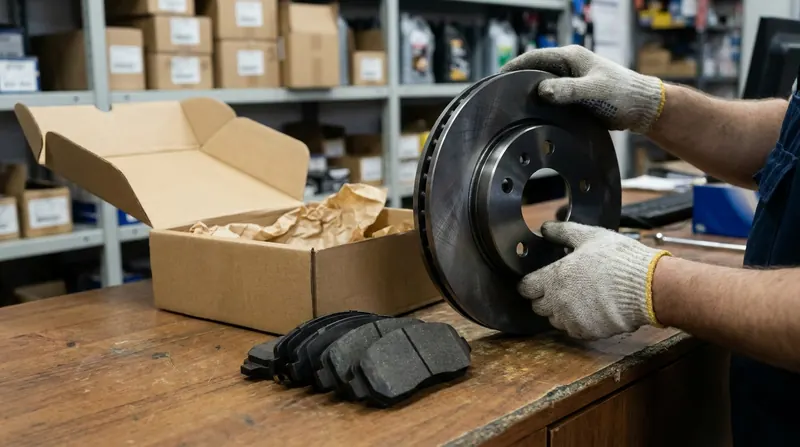
Three different returns
It helps to separate what is often lumped together.
- New return. The part was not used: wrong part, job cancelled. It goes back into stock.
- Warranty return. The part was installed and failed within the warranty period. It goes back to the supplier as a claim.
- Core return. The old unit comes back for its deposit. See how core charges work.
Mixing them is how a failed alternator ends up back on the shelf as new stock.
At the counter
What gets recorded when the part comes back decides whether the claim succeeds.
- Find the original sale. It proves the purchase date and the price paid.
- Record the vehicle, and the mileage at installation and at failure where the supplier asks for it.
- Record the complaint in the customer's words: noise, leak, no output, failed after two weeks.
- Look at the part. Obvious damage, wrong application or missing components are better found now than by the supplier.
- Test what you can. A good share of returned electrical parts test fine. Bench testing starters, alternators and batteries protects both you and the customer, whose real fault is elsewhere.
- Tag the part with the claim reference before it leaves the counter.
What the customer gets
Decide your policy and apply it evenly: replacement, credit or refund, and whether a replacement is given immediately or after inspection. Commercial accounts generally expect an immediate replacement. Note that the replacement part normally carries the remainder of the original warranty and not a fresh one, unless the supplier says otherwise.
Claiming from the supplier
Every supplier has its own procedure, and following it exactly is most of the job.
- Authorization. Many require a return authorization number before the part is shipped.
- Paperwork. Proof of purchase, vehicle, failure description, sometimes test results.
- Deadlines. Claims usually have to be filed within a set time of the return.
- Disposition. Some suppliers want the part back. Others allow you to destroy it in the field against a photograph or a periodic inspection.
- Warranty allowance. Some suppliers give a fixed percentage allowance on purchases in place of individual claims. Then every warranty return is a cost against that allowance, and worth tracking against it.
Labour claims
When a shop has to do a job twice because a part failed, it will ask who is paying for the labour. Most part warranties do not cover it. Where a supplier or program does, expect conditions: a professional installation, a labour rate and time cap, the original repair order, and approval before the repair. Know your suppliers' positions before the conversation, and never promise labour on a supplier's behalf.
Where the money gets lost
- Replaced for the customer, never claimed. The part sat in a warranty bin until the deadline passed.
- Claimed, never credited. The part was sent and nobody checked the statement.
- Denied, never followed up. A denial for missing paperwork can often be fixed. One that is never read cannot.
- No record of the failure. "Does not work" gets a claim denied where "no charge output, bench tested" does not.
- Charged back and not noticed. A supplier reverses a credit after inspecting the part.
What to track
- Every open claim, by supplier, with its age and deadline.
- Claims credited, denied and outstanding, in dollars.
- Warranty rate by product line. A line with a high rate has a quality problem or a catalogue problem.
- Warranty rate by customer. One account with far more failures than the rest may have an installation issue worth a tactful conversation.
Warranty and core tracking through to the supplier's credit is part of what we are building into inventory and counter sales in Parts Commander. Rules on consumer warranties vary by province and state, so check the ones that apply to your business.
Common questions
Who pays for a warranty part, the store or the manufacturer?
The manufacturer or supplier, if the claim is accepted. The store normally replaces the part for the customer first and then claims from its supplier, so it carries the cost until the credit arrives.
Does a parts warranty cover labour?
Usually not. Most parts warranties cover the part only. Some suppliers and programs offer labour coverage under specific conditions, which will be set out in their warranty terms.
Why are warranty claims denied?
Common reasons are no proof of purchase, a claim outside the warranty period, signs of incorrect installation or contamination, a part that tests good, or a return that missed the supplier's deadline.